DRM-Free Movement: 7 Powerful Reasons Why Digital Ownership is the Future
On This Page
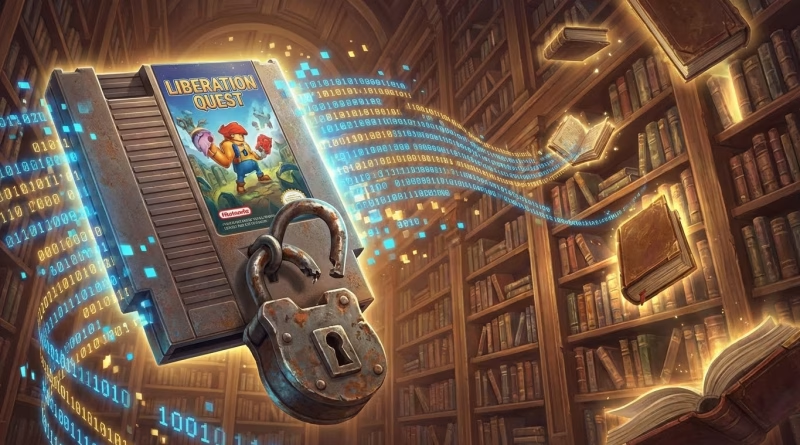
DRM-Free Movement momentum is fueled by a growing awareness that “buying” a game on a traditional digital platform is often nothing more than a temporary license agreement. When a publisher decides to delist a game or shut down an authentication server, that title can become unplayable even for those who paid full price. This fragility in the digital ecosystem has led to a massive resurgence in the demand for games that do not require an active internet connection or a specific launcher to function.
The Powerful Rise of Digital Ownership
The core philosophy of the DRM-Free Movement is simple: if you buy it, you should own it. Digital Rights Management (DRM) was originally designed to prevent piracy, but in practice, it often only inconveniences the paying customer. DRM-free games allow users to download offline installers that can be backed up to external drives, burned to discs, or moved between computers without needing to “check in” with a corporate server.
This shift is creating a “Gold Standard” for digital retail. Platforms like GOG (Good Old Games) have built their entire brand around the DRM-Free Movement, ensuring that every title sold on their store is a permanent asset for the user. As players become more wary of “Games-as-a-Service” models, they are gravitating toward storefronts that respect their right to keep what they pay for.
How the DRM-Free Movement Protects Game Preservation
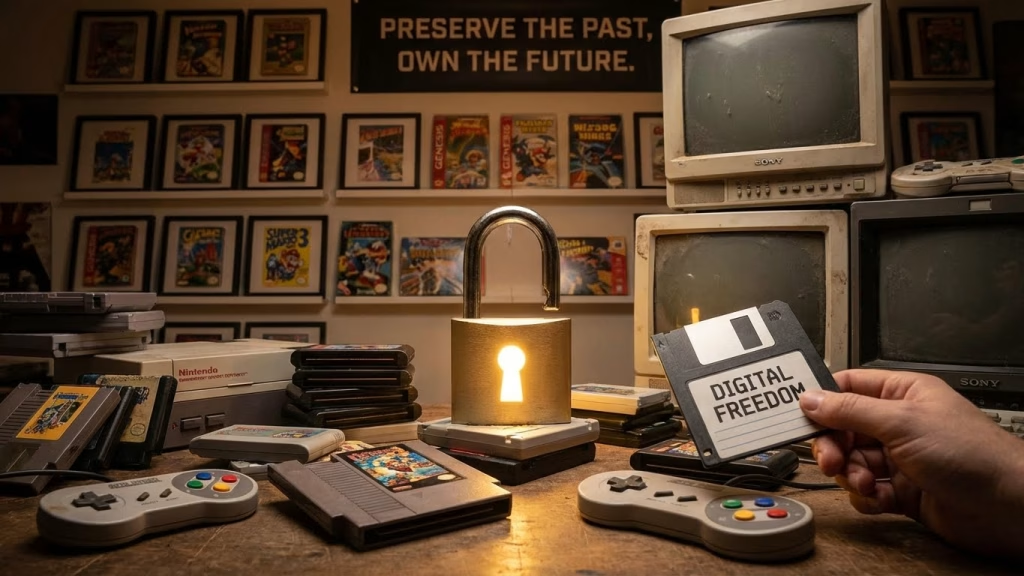
Preservation is perhaps the most critical pillar of the DRM-Free Movement. The gaming industry moves fast, and older titles are frequently lost to “bit rot” or legal limbo as developers go out of business. Without a physical or DRM-free copy, these pieces of cultural history can disappear forever.
By advocating for the DRM-Free Movement, historians and fans are ensuring that games remain playable decades after their release. When a game is free of intrusive DRM, the community can create patches, mods, and modern wrappers that keep the experience alive on new operating systems. This makes the DRM-Free Movement an essential guardian of the medium’s legacy, preventing a future where our digital past is entirely deleted.
Solving the “Always-Online” Friction for Players
One of the most frustrating aspects of modern gaming is the “Always-Online” requirement for single-player titles. The DRM-Free Movement directly opposes this trend, arguing that a player’s ability to enjoy a game should not depend on their ISP’s stability or the publisher’s server uptime.
Whether you are traveling, living in an area with poor connectivity, or simply want to avoid the bloat of multiple background launchers, the DRM-Free Movement provides the solution. By stripping away the requirement for persistent authentication, games become more accessible and reliable. This reliability is why we are seeing a “Flight to Quality” where gamers intentionally seek out DRM-free versions of titles, even if they are available elsewhere.
The Economic Security of the DRM-Free Movement
From a financial perspective, the DRM-Free Movement offers superior value for the consumer. When you own a DRM-free installer, the value of that purchase never degrades based on a company’s business decisions. You are insulated from the risk of “platform lock-in,” where your library is held hostage by a single storefront that might change its terms of service at any time.
Furthermore, the DRM-Free Movement encourages a healthier relationship between developers and fans. It fosters a “Trust Economy” where developers provide a high-quality, unencumbered product, and fans support them in return. Data has repeatedly shown that DRM does very little to stop determined pirates, but the DRM-Free Movement builds a loyal customer base that values transparency and respect.
The Future Architecture of Ownership
As we look toward the future, the DRM-Free Movement is likely to merge with emerging technologies like decentralized storage and digital ownership certificates. The goal is to create a digital world where “ownership” is a technical certainty rather than a corporate promise.
The most successful developers of the next decade will be those who embrace the DRM-Free Movement as a core feature. By treating players as owners rather than subscribers, they are building a sustainable future for the industry—one where our digital libraries are as permanent and personal as the physical bookshelves of the past.